What happens next?

Many stories ask this question. Possibly even most stories ask this question. Think of your thrillers, your page-turners, your beach reads—but sometimes deeper things too. We want to rush to the end. The sequence, the clock, the progression pushes us forward.

Now think of about rituals.

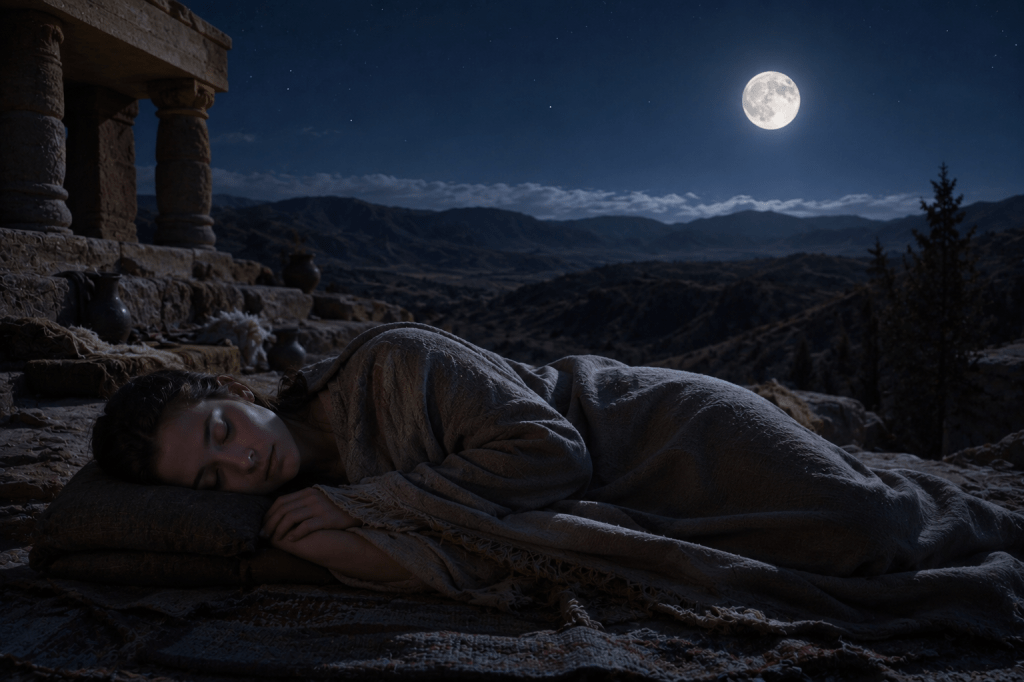
They center around things like the moon, the sun, the harvest, the seasons, life stages. These things don’t move forward at all. In fact, some of the things that make ancient civilizations the most sympathetic to me, anyway, are those natural (nature-based) and human things that have nothing to do with progress and everything to do with return. A Roman baby bottle made of terracotta has a blessing on it to (we can only hope) prevent breakage. A girl sleeps in the right place under the right sky to dream of her future husband. An early Icelander (aka Viking) places an object with a rune on it and ties it to a woman’s thigh to protect during childbirth. I can understand these things, these rituals.

The moon has been young for a very long time.

Ritual is a place we return to, but here’s the thing, it’s not redundant or boring. It’s liminal, because each time, it’s not the actions that change, it’s the meaning.

Enter Lord of the Rings.

Remember how Frodo takes a little jaunt out hiking at night, but then he finds a place to rest at Farmer Maggot’s and again at Crick Hollow and again at the Prancing Pony? Come to think of it, Rivendell and Lothlorien are also places where our heroes rest after adventures, after times of stress. If you drew the book, it would be one long stretched Slinky toy. We go off, we encounter danger and stress, and then we get somewhere safe. But for people who like the book, it’s not boring. Why? Because those times of rest and release aren’t doing nothing. They’re not a vacation or a spa. They’re a time of meaning-making where we reflect on what we just went through.

Lothlorien

This is probably the most poignant liminal time of rest and release in the story. (Don’t worry, if you have a different scene you’d fight for, I’d listen to you. But Lothlorien is still a good one.)

What’s just happened? Big stuff. They went through the mines of Moria where they found Balin’s tomb. (If you love The Hobbit, this was pretty emotional.) They almost got lost. Frodo was sort of impaled by a spear. They get chased by a mass of orcs. And then the Balrog. If you know your lore, you know that these guys are trouble. So much trouble that this one kills Gandalf.

The whole party is exhausted and ruined by grief.

So, Aragorn takes them to his (very nearly) grandmother-in-law’s house. Galadriel. And basically, nothing happens. They talk. They eat. They sit around and rest.

Except that this is where they are all tested. This is where the seeds of Boromir’s betrayal are planted. Frodo and Sam learn about the enemy and see what Galadriel would have become if she had taken the Ring. It’s actually a busy, busy section, but only in their hearts, minds, and souls. They reevaluate everything that has gone before, and it takes on new meaning. The Ring was dangerous, sure. But now Sam knows that it is directly tied to the future of the Shire in a very real way. Frodo begins to understand the Enemy at a new level.

Can you describe The Lord of the Rings using Campbell’s Hero’s Journey? Sure. It has the right stuff:

·      Call to adventure

·      Refusal/hesitation

·      Crossing the threshold

·      Trials

·      Descent into darkness

·      Return

Except that at the end, there is no victory, at least, not for Frodo. He is gradually transformed, wounded, diminished, and altered. The story’s central question not about conquering the villain. The story asks, “What happens to a person who bears this burden?”

Now let’s look at how it maps to a ritual narrative structure:

Separation (from the Shire and from an innocent worldview)

Liminality (This is the whole middle of the book. They are constantly having who they are stripped away and are reevaluating what things mean. Not just Frodo—but he is extremely stripped of his identity by the time he reaches Sammath Naur. As in, that’s the whole point of the book: he’s not Frodo anymore, he’s been taken over by the Ring.)

Return (The Shire is changed forever. So is Frodo.)

That liminality section is pretty vague and big. How does it work? Repetition. Stress and release. We do the same pattern, but it means something new each time.

First Repetition

At Bree and Weathertop: Can I resist putting on the Ring? Barely.

Second Repetition

At Rivendell and afterward: Can I carry this burden? Maybe.

Third Repetition

At Amon Hen: Must I carry it alone? The question deepens. The answer is both yes and no.

Fourth Repetition

The Dead Marshes: The burden is now psychological and spiritual. What is the Ring doing to Frodo? Nothing good.

Fifth Repetition

Shelob: The burden becomes suffering and death. Will Frodo fail? Yes. (Note on this: Another time we can talk about eucatatstrophy in Tolkien, but for now, just know that Tolkien’s philosophy is that we are all fallen and doomed to a tragic end, BUT you keep going anyway because it leaves the door open for a miracle. That’s how he answers some of the Christian conundrums between salvation and works.)

Sixth Repetition

Mount Doom: The question finally reaches its center. Can any creature possess absolute power and willingly surrender it? No. No they can’t. Not even Frodo can do it. But enter eucatastrophy and salvation both in spite of and because of doing all we can do.

So, Tolkien sets up these repetitions through stress and release patterns that keep spiraling through. They circle around the question of the Ring again and again, not pushing forward, but taking something big and complex and looking at it through different lenses.

Some of the stress and release moments:

Old Forest → Tom Bombadil

Weathertop → Rivendell

Moria → Lórien

Helm’s Deep → Isengard

Shelob → Field of Cormallen

Tolkien repeatedly allows recovery after crisis. This sometimes frustrates readers expecting plot-driven pacing. But from a ritual perspective, it makes perfect sense.

There are lots of reasons why The Lord of the Rings feels like an old book that comes from tradition rather than one author. One of those is that a plot-driven narrative is not always how stories were constructed in old stories.

Circles and spirals feel old to us because they are. As old as the moon. But not all moons mean the same thing. Rituals help us to know what the moon means for us now and helps us change what the moon means on another night.

That’s the kind of story that a ritual narrative structure tells. And honestly, that’s my kind of story.
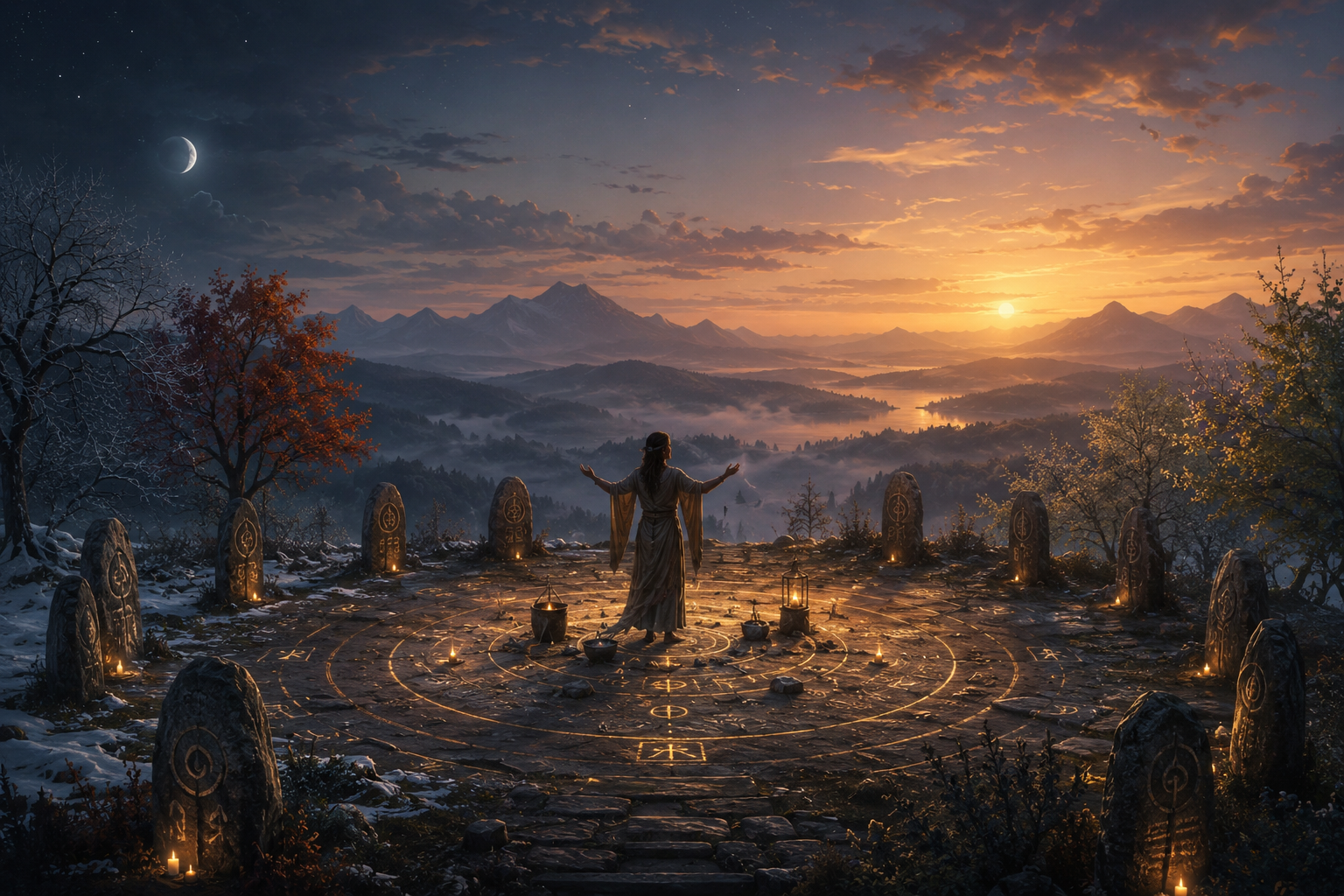
A woman stands in a ritual circle with standing stones and candles around her.

When people talk about story structure, Joseph Campbell’s Hero’s Journey often takes center stage. It’s become a kind of narrative shorthand, especially in film, fantasy, and game design. But not all meaningful stories are really about heroes conquering the world. Sometimes stories are more subtle than that. While Campbell was an anthropologist who looked at how the man goes out to slay the beast and comes back changed, other anthropologists (still men, alas) looked at how ritual is invoked to bring meaning to the changes that happen whether we choose to go out of the village or not. Birth, maturation, marriage, death. Some stories are about crossing thresholds, being unmade. The one who returns is not the changed hero, but a new person.

Let’s start with Campbell, just in case you haven’t been initiated into the Hero’s Journey. Joseph Campbell’s concept, sometimes called the monomyth, describes a recurring pattern he identified across many world myths. While it has many elaborations, the core arc looks like this: 

1.     Departure

– The hero begins in an ordinary world.

– A call to adventure disrupts the status quo.

– After some resistance, the hero crosses a threshold into the unknown.

2.     Initiation

– The hero faces trials, enemies, and allies.

– A central ordeal brings the hero to symbolic death or extreme risk.

– The hero gains a reward: knowledge, power, or an object.

3.     Return

– The hero returns to the ordinary world.

– The reward is brought back to benefit the community.

– Order is restored or improved.

Don’t get me wrong, Campbell’s structure is great when you’re focused on external action. But when you’re talking about changing inside, about identity, about relationship, it’s not so good.

Enter ritual narrative structure. Let me guess, you’ve never heard of it, right? Most people haven’t. Somehow, Campbell had better marketing, I don’t know, but honestly, Arnold van Gennep published his work first, all the way back in 1909. And then Victor Turner published several books in the 1960s, and while he took the anthropology to story places, the theater especially, it just…didn’t hit stories the way Campbell did. I’m tempted to say that gender constructs had something to do with it. Probably Freud was in there somewhere, because anything in the middle of the 20th century that has to do with gender and goes wrong is probably Frued’s fault.

            But I digress. If you are like I was, you are not just interested, but desperate to hear about a story structure that has to do with cycles, with thresholds, with the rituals that make meaningful life and community work.

The anthropology work is based on rituals that mark life transitions: birth, adulthood, marriage, death and more. (I won’t get into it here, but if van Gennep had been a woman, he would have included menopause like Sharon Blackie does, but that’s for another day.) He observed communities in Africa mostly and noticed a shared structure he called rites of passage. These rites have three stages: 

1.     Separation: The participant is removed from their previous social role or identity.

2.     Liminality: A threshold state: “betwixt and between.” Old rules no longer apply, but new ones aren’t yet formed. Identity is unstable, ambiguous, or dissolved.

3.     Incorporation: The participant goes into the wilderness and dies; a new person/identity returns. The change is recognized and socially acknowledged. The journey is about becoming.

When Victor Turner came along he expanded van Gennep’s ideas, focusing especially on liminality. Turner described liminal spaces as rule-breaking, symbolic, dreamlike or dangerous, often overseen by tricksters, guides, or monsters. Think about a shamanic tradition of going to the underworld to find the soul pieces that are lost or severed. It makes me think of the Popol Vuh stories from Mexico. They’re pretty weird and shamanic and liminal. We’ll get into them another day, but they’re worth a perusal at least at a Wikipedia level.

One important point about when a person crosses the threshold into a liminal space. Hierarchies collapse. Think about quests where people who are “higher” and “lower” work together. Remind you of any Numenorian kings and hobbits? Or maybe a unicorn and a…what would you call Molly Grue…a strumpet? You don’t get to be the most important person because of birth or money in liminal spaces.

Another important point, you don’t necessarily fight. You may not conquer. But what will happen is that who you are when you entered is stripped away from you. Sometimes all at once, sometimes in phases or bits, but you change. Sound like real life? What happens when you’re a teenager? What happens if you go through a traumatic experience? You don’t conquer, but you do change, and you come out the other side not by killing a monster, but by finding meaning in your new reality. Anyone who has ever experienced cancer and lived knows what I’m talking about.

So here it is:

The Ritual Narrative Structure

When we apply ritual theory to storytelling, we get a structure that looks something like this: 

1.     Separation: The protagonist is pulled (or wanders) out of a familiar identity. This may be quiet, accidental, or unwanted.

2.     Liminal Descent: The protagonist enters a strange, symbolic space. Time, rules, and logic may distort. Guides and antagonists often blur together. The protagonist loses certainty, innocence, or selfhood.

3.     Transformative Ordeal: Not a “boss fight,” but a moment of recognition, grief, or surrender. The old self can no longer continue.

4.     Return or Re-entry: The protagonist exits the liminal space. The world may look the same—but the protagonist is not. The change may be bittersweet, partial, or irreversible.

Once again, these are stories about identity. Who are we, how do we relate to each other, and what does life mean? Let’s look at a couple of stories that you could map with Campbell, but honestly, they fit better with ritual.

The Last Unicorn by Peter S. Beagle. Of course I’m talking about the novel. No, I don’t hate the cartoon, but if you’ve experienced both, you know.

Separation:
The unicorn leaves the immortal forest, abandoning timeless innocence.

Liminality:
The unicorn becomes human. She began to be stripped of her identity when she first heard that she is the last unicorn. When she becomes human, she is neither truly immortal nor mortal. Mortality, fear, desire, and regret flood in. The world is strange, painful, and morally ambiguous.

Transformative Ordeal:
Love, loss, and self-awareness permanently alter the unicorn. What is gained cannot be unlearned. She is no longer like the others, for no unicorn was born who could regret, but now she does. She, an immortal being, regrets.

Return:
From the moment she learned that she was unique as the last unicorn, there was no turning back. She is going to be different forever, but both joy and sorrow live in her. She will remember Prince Lir when humans are fairy tales in books written by rabbits.

And what about the elixir of life from the Hero’s Journey? There isn’t one. She paid a terrible price willingly. She saved the unicorns, but not herself.

Labyrinth: Jim Henson’s amazing film from 1986

On the surface, Labyrinth looks like a quest. In practice, it is almost a textbook ritual narrative. 

Separation:
Sarah escapes a frustrating adolescence and wishes away responsibility.

Liminality:
The Labyrinth is a classic liminal space: nonlinear, symbolic, ruled by tricksters, full of false choices and identity tests. Allies mislead as often as they help.

Transformative Ordeal:
The confrontation with Jareth is not about defeating a villain, it’s about rejecting a fantasy of power and eternal childhood.

Return:
Sarah comes back to the same world, but with a new internal stance. She doesn’t leave the fantasy world behind her, but now she understands how to love these things as an adult rather than be ruled by them as a teenage child.

So when do you use a ritual narrative structure? When your story is about:

·      Grief

·      Coming-of-age

·      Gender

·      Identify

·      Mortality

·      Loss leading to wisdom

Then consider a different structure, one that is about crossing thresholds, and by the way, look for the next post because while the Hero’s Journey has a big circle, the ritual structure has circles too, or spirals, or—-well, we’ll look at it next time.

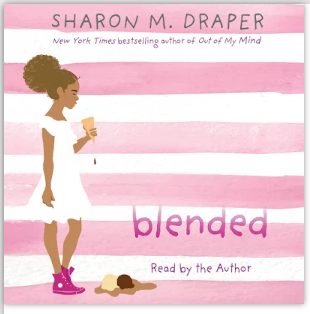
blended

It seems like suddenly there is a small explosion of multicultural books, which is great. Ten or so years ago, most of the books I could find about cultural minorities tended to have themes of surviving in a world where they either didn’t fit in, or they though that they did until they realized that the deck was stacked against them because of something out of their control.

Blended, is a book that gets one step beyond that, which is at least progress–not for the book, but for the culture that the book is relevant for. As Isabella’s parents split up and find new identities, she is pulled in both directions even more than is typical for a kid who suddenly has a complex family, because her mom is white, and her dad is black. And Isabella didn’t know that she was…well, that her cultural identity…well, the question she asks in the book is “Who am I? And is it relevant to ask what am I?”

That’s a hard question for an eleven-year-old to suddenly be hit with. And the subplots of the story give her other cause to reflect and try to determine which “category” she fits into. I’ll avoid spoilers and just leave it at that while the book tackles this issue as carefully as an essay would, it does so through Isabella’s experiences and leads her to explore and define her own identity.

The part that I love about this message is the permission it give to a child to define yourself–but only after some experiences that anchor the reader to why it is difficult to come up with an answer.

As far as literature goes, it’s a good read, but not one that would stay with me or warrant re-readings as an adult. However, it’s a fun read for kids (and grownups who like kid books), and it is a very palatable way to explore some sensitive and confusing territory. Draper does a great job, to my mind, at walking the line between real treatment of issues and keeping it friendly for the 10-12 year-old range. That means that a child that is super-sensitive to cultural issues, especially those affecting African Americans, might find this a hard book, but I’m pretty wimpy, and I thought it was more fun than issue. I’d say it’s a solid read, and a good conversational springboard for kids who are dealing with this situation–or ones who would be enriched by building awareness.


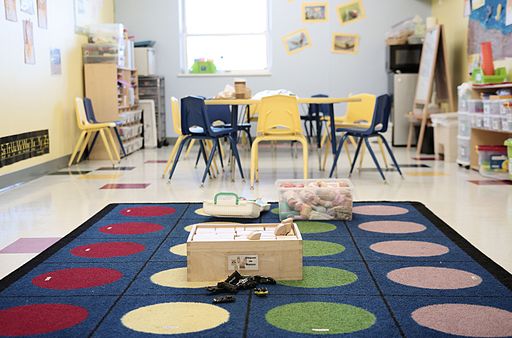
Empty_classroom_at_CommuniKids

(Photo Credit: User:OgreBot/Uploads by new users/2016 March 04 18:00)

Over the last several weeks, I have been speaking with teachers, principles, and district administrators from across the country. Universally, the changes to how school works, how education works, are disruptive to educators.

Those who are fairly tech-savvy fare better. One teacher who already had Google Classroom set up felt lucky because all she had to do was extend what she was already doing. She said thank goodness that she had already trained her kids on how to watch flipped math videos online, how to look for assignments on Google Classroom (and then complete and turn them in). Her kids were familiar with Nearpod content. They all had the tools that they needed for success. And yet, it was still a struggle to find enough of the right materials to fill a day in meaningful ways. Her reading program had been from a basal rather than adding more “screen time” to her kids’ day. Just a few weeks ago, that had been a good thing. Now she worked to piece together resources and find a new normal where her kids felt connection, a predictable schedule, some kind of normal routine to what school looked like now.

In the interviews I have completed, no one is succeeding more than this dedicated teacher, and many are working even harder with many more obstacles. As I talk to schools, the order of business seems to follow Mazolow’s hierarchy pretty consistently.

First order of business: Communication

This might seem higher on the scale, but without communication, resources can’t get to families. And typically, the families who need it most are the ones who are hardest to get in touch with. Some districts are spending the bulk of their resources just finding everyone and making sure that they are okay—for a very minimal definition of okay.

Feeding Everyone

If you haven’t been in the school system since you were a student, this one might surprise you, but I hear from many schools that their families depend on the school for this contribution to the family budget. They count on not buying breakfast and lunch five days a week. If they have to suddenly add that expense—and sometimes that expense comes along with lost wages—it is truly a burden on many families.

Getting food to students during this time is no small feat. If parents are essential workers, who is there to go to the school to pick up the food? Schools have had to add hours in the evening for pickup or get creative, like one district I talked to that arranged for a school bus to deliver lunches to apartment building parking lots.

Now here’s the trick with communication, families have to know to come down and get the food. And parents have to give permission for kids to leave the building to go to the parking lot by themselves, because remember, parents are at work, and kids are home (trying to manage school and tending younger siblings) alone.

Technology

Even if we completely forget all concerns about screen time, not all families have a screen or internet to get content on to the screen. Most (though not all) families have at least one cell phone, but while that works for notifications, try fitting school for multiple kids around one phone after work. Not the most effective way to do things.

School infrastructure varies. Most common is one chromebook per family with the hope that they aren’t destroyed or lost or what have you. Many schools have purchased wifi hotspots—but suddenly having enough budget and taking the time to research, purchase, distribute, etc. is not instant. Schools are more likely to have 1:1 chromebooks for high school students, less likely for younger kiddos; iPads play more of a role in early elementary. There are a lot of devices out there, but you’re lucky if your school has sort of enough.

What Do We Teach?

This one is all over the map. The schools who have more affluent settings are more likely to be covering new content—though I haven’t talked to anyone who is trying to cover content with as much depth as they would in the classroom.

Another option is to cover only those standards that are easier to cover through distance learning. The philosophy is that it is better to succeed at some learning than fail at expectations that are too high for the teachers along with everything else that a teacher is juggling right now. And I can see the argument there.

Some schools are just reviewing. Nothing new, just review and solidify what has already been taught. This gives teachers and students a little bit of breathing room to focus on learning an entirely new system while still doing some good for education.

And what about grading? Most schools are opting for non-punitive grading. The rules vary a lot, but the basic idea is that your grade is assumed to be what it was before we all went home (or whatever your grade was from last term). It can go up as students complete new work, but not down. This prevents penalizing students for being in inequitable situations, and yes, it inflates grades and makes them significantly less meaningful, but we all muddle through.

Planning for Next Year

This is a big one. Again, some schools are already heavy into preparing, others hope that they can think about it one of these days, but all of them agree on one thing—the range of where kids are in standards mastery come fall will be wider than it has ever been. Some kids will keep learning; some kids not so much. It is highly unlikely that kids will be learning the same things to the same depth as each other.

Everyone knows that we’ll have a big job this fall. We will need data and tools to personalize learning like never before regardless of where school takes place.

How Has School Changed Forever?

No one knows for sure. Everyone agrees that it will never be quite the same. Some believe that it will be vastly different. Certainly teachers have been forced into a steep learning curve with technology teaching tools that some have resisted for a long time. Will that be a benefit for education—clearly, that is a debatable answer. It depends on a lot of variables about what happens with that technology. I don’t know that anyone wants kids to be passively staring at screens all day as concepts roll over them, but what does good technology look like in education?

What Schools Are Getting Right, Right Now

It has been humbling to see the dedication, care, and worry that so many people are pouring into kids and their families right now. They aren’t just doing a job, they’re tracking down members of a community to make sure that their people are safe, fed, and hopefully educated a little. I don’t know that the impact that educators are making on these kids will ever be measured—it will likely be lost in next year’s worries about lost learning time—but these women and men are doing what they went into education to do: make a positive difference in kids’ lives. They just had no idea that it would look like this during their preservice courses in college.

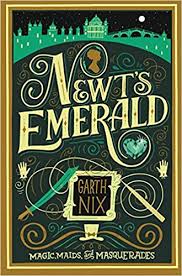
Newt

Regency for the younger and/or sillier crowd.

Of course Garth Nix is a solid writer. You might have heard of the Sabriel, Lirael, Abhorsen books of the Old Kingdom series or maybe even the Keys to the Kingdom series that begins with Mister Monday and continues on through the week. All good books, but very different from Newt. In fact, if you look on Garth Nix’s website, you’ll only find one book under his “Fantasy Romance” section. And this is it.

On her eighteenth birthday, Lady Truthful is due to inherit the family heirloom: a magical emerald. Only problem is, when they bring it out to look at it, the gem is stolen. When her father is taken ill and her cousins are suddenly rendered not-sensible in their approaches to handling the problem, Lady Truthful–or Newt, as she is know to her family–must seek help from her magical aunt (and a magical mustache of disguise) to search for the culprit herself.

If only that pesky, good-looking detective-ish government agent with a mysterious secret of his own would quit trying to help. Or maybe she’s fine with him helping. But of course, her own secrets might be a problem at this point…

What I love about the book is that it unabashedly embraces all of the regency and adventure tropes with a tongue-in-cheek attitude. There might be a rejected proposal somewhere in this book, but it’s a little bit hard to take it too seriously. On the other hand, the characters are likably imperfect the whole time. And you have to love a powerfully magical great aunt who boosts her thinking power by wearing a magical fez.

This is a perfect book for a lazy Saturday morning or a road trip audio book.


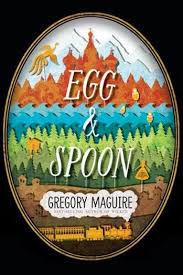
EggAndSpoon

I picked up Egg and Spoon by Gregory Maguire on a whim. I think it was on sale or something. I didn’t do it because I’d read Wicked—since I’m one of the few people who didn’t fall in love with that book, even though there were some things I really liked about it—but because I rarely come across a book with Baba Yaga in it. Worth a try, I thought.

The interesting thing to me is that this is one of the few books that plays with the kid/grown up border in a particular way. Let me explain—no, there is too much; let me sum up.

Lots of kids books have allusions or jokes or themes that go over kids’ heads or that aren’t really there for them. Adults like them and stay interested. Especially if the book is a read-aloud (or kid movies, for that matter). And of course, there are more grown-ups like me these days who kind of sort of never outgrow children’s literature. In public even…mostly.

And there are lots of grown-up books (I use the term “grown-up” to avoid dealing with the multiple meanings of “adult” literature.) that have roots in children’s books. Especially fairy tale retellings, but not only those.

Egg and Spoon, however, feels like a grown up book to me. It doesn’t try to accommodate reading level or vocabulary—but then many children’s books do that. It’s more that the tone is the kind that a grown-up book has. The pacing. The ambiguity of the characters. However, this is where it seems strange in a good way to me: it never quite becomes “adult,” and by that I don’t mean just the racy stuff, but how close it gets to hard things. Plenty of hard stuff in here—family members who have died or are absent for sad reasons, illness, starvation, prison, and so on. And of course, if Baba Yaga is in there, you know that the author is at least going to bring up the topic of eating children. There are a couple of skulls…I don’t think that’s a spoiler to anyone who has ever read any Russian folk tales—as in ever.

And of course, if it has any kind of Russian roots, then there will be hard times ahead for the characters—and probably a past full of them as well.

Here’s a quote to give you an idea of what is wrong in the world of Egg and Spoon. The weather is all wrong, and not only that. But in Elena’s life, it amounts to no food and no adults that can protect her.

“What are we going to do? Such a bad harvest last summer and too little snow now to irrigate the fields come spring …” “The world is protesting. It feels like a summer cloudburst coming, yet the hymns of the high holidays still ring in our ears. Can the calendar turn inside out? Can a year run backward?” 

(And by the way, did you notice the nice hints of lyric prose in there? The book has a really nice layer of languge that doesnt get too pretentious.)

***

Here’s the thing. I’m kind of a wimp. One of the things I don’t like about grown-up books is that usually you’re an older person watching people suffer. You’re probably suffering yourself too, but it’s likely that you’re going to watch children suffer as an adult, and there is nothing you can do about it. I hate that. I just have a hard time with that. I tried to re-read Anna Karenina when my oldest child was a few months old. Big mistake. Would someone just feed the baby already? Who cares about the plot? Just feed the kid. We do not let babies cry with hunger and face starving to death in my world. Just don’t.

And violence. And abuse. Same story. You get the idea. I’m not going to go there because I don’t.

So Egg and Spoon. There are hard things in there, sure, but it doesn’t get too close to them. It deals with them in the way that children’s books do. You get the idea. You feel for how hard a child’s life is, but the hard things are from a child’s perspective, and they never cross the line (in my opinion) to too much. The author never hurts you—he goes there with you and holds your hand and you think about the world together.

Some authors like to take you to the edge of the cliff, wait until you’re peering over, and then kick you from behind. Have you noticed? They give helpful comments as you fall and then splat on the bottom. “See?” they say, very helpfully. “Wasn’t that awful? Did you notice how awful that was?” Yep. Got it.

Back to Egg and Spoon again. No cliff. No splat. Not quite poetic, but close to it. Lots of things I wanted to highlight. Observations that people make. Lots of characters that are tangled up in their choices. I didn’t say good and bad choices, because the narrator doesn’t really judge their actions. He points them out fairly often and thinks about how this person or that person had to choose, but there isn’t the Victorian flavor of helpfully letting you know what is right and wrong. Just that it’s a tough spot to be in. I felt more permission to be a flawed human than I usually find in books. It was…kind of nice.

But now that we have had the “grown up book that you don’t have to be afraid to read even though it’s not a fluffy book” discussion, I wanted to just point out the tone. It’s really fun.

Now I wondered just at first. For the first while in the book, there isn’t any magic, and Elena is in a tough spot. Her father has died, her brothers are gone, and her mother is very probably dying—especially since they don’t have any real food. I admit that I wasn’t sure that I wanted to stick it out for over eleven hours. (I started with an audio book on a long drive and then switched back and forth between Kindle and Audible when I got home.) But it was so worth it.

If you’re not sure, you could even skip to about section 27 (of 80-something) in the audio book just to hear the Baba Yaga part get going and see if you like what the fun and magic is like when it really gets going. All I’ll say is that Baba Yaga is a lot of fun. I’m not sure if she’s a “pure” Baba Yaga or not. She has the danger of the fairy tale Baba Yaga—but then she also quickly becomes—if I say zany or wacky, you’ll get the wrong idea. Mad with a method might be a better way to explain it.

Here are a few quotes just to give you a taste:

“Let’s see what we have in the larder. We have eye of newt and toe of frog, carbon-crisp residue of manticore loin, a beaker of all-natural belladonna extract, some wolfbane, some romaine, a poteen of ptomaine, and a few limp radishes in butter, pinched from the platter left out for Marat after his bath, which he never got to since he died therein. Let’s have cheerios.”

“I don’t know what cheerios are,” said Cat.

“They haven’t been invented yet. You’ll love them.”

* * *

“Furniture!” bellowed the witch. “Tables, bathtub, the lot of you. It’s time to go out in the world and seek your fortunes, if that’s your hope.” There was a crashing sound as all the furniture went and tried to hide under the bed, and the bed tried to hide under itself.” 

***

It’s really fun. So I’m not sure that Baba Yaga is a “true” Baba Yaga, but I do feel that she fits the spirit of a strange other-world character interacting with real life and changing it, morphing hard times into a fairy tale. Adventures are more fun than just dreary adversity. And if life gets pulled into an adventure in the forest that goes to the forest in the North in a house with chicken legs, all the better. This Baba Yaga kept reminding me of both of the witches in Spirited Away. Not exactly like that, but I think you’ll see snatches of a resemblance here and there.

I don’t want to spoil, but since there is foreshadowing, I don’t mind giving you a hint: There’s an ice dragon and a firebird. And of course, you’ll find an egg that was stolen or lost or might break or won’t hatch. Those are all in there, taking their turns and sometimes sharing scenes. The Tsar gives a festival in flooded Petersburg on floating pavilions connected together with light-strung bridges. He wants his godson to meet all of the young ladies and become betrothed—but lest things get too Cinderella-ish, none of the three young people involved particularly want to become betrothed to anyone. In fact, the prince is just bored with a grown-up party. And then—but I forgot, no spoilers. Drat.

Well, if we can’t talk about the table with four human legs and the magical thing that Elena sees in the forest, and the black chicken whose wish is granted, then I’ll just have to leave you with one of the philosophical quotes by people who might have been side antagonists and who turn out to be real people:

“Now we’d help her if we could. We can’t. So we’re helping you. That’s all that most of us who are not Tsars or witches can manage to do.”

I think I might read this one again. And did I mention that even though a house with chicken legs can’t talk, it still can have maternal feelings? Regardless of whether or not it really was created out of a Mendel-based genetic engineering experiment that went a little bit wrong.